SY Cable: PVC-insulated/sheathed with galvanized steel wire braid; gives high mechanical safety in opposition to crushing/abrasion in harsh out of doors or heavy-duty applications. KVVP: Shielded model of KVV with copper braid; broadly used in noisy industrial zones for reliable sign integrity. In modern industrial methods, selecting the precise management cable is critical for making certain dependable signal transmission, system automation, and operational safety. These cables are predominantly copper-based mostly, making certain low-loss signal transfer. Selecting them incorrectly might result in equipment malfunctions, sign interference, and even security incidents, ultimately inflicting economic losses. Selecting the right management cable is essential for dependable sign transmission, system safety, and longevity in industrial automation, renewables, rail, good manufacturing, and extra. Control cables are available in varied varieties tailor-made to particular functions, environments, and safety wants in industrial automation, machinery, renewables, rail, and sensible grids. With the rise of automation, good manufacturing, and global infrastructure initiatives, understanding management cable varieties, standards, and functions has become important for engineers and procurement professionals. 6.5-7% CAGR from 2026), understanding these distinctions ensures secure, efficient system design and avoids pricey mismatches. From understanding management cable types to evaluating requirements and functions, each step plays a vital position. Control cable: Low present-carrying capability.
Voltage & Current - Power: high; Control: low. Construction - Power: thicker insulation/sheath, larger cores; Control: finer cores, often shielded. Purpose - Power: vitality supply; Control: signal transmission. Applications - Power: grids, motors, substations; Control: automation, renewables, rail, good manufacturing. Proper set up of management cables is crucial to ensure reliable signal transmission, minimize electromagnetic interference (EMI), stop failures, and lengthen service life in industrial automation, renewables, rail, and good manufacturing programs. Evaluate Shielding Needs - Use foil/braid shielding (e.g., tinned copper) to combat electromagnetic interference (EMI), crosstalk, and noise-essential for analog signals, PLCs, or high-precision knowledge. Rated at decrease voltages (normally 300/500V, 450/750V, or 600/1000V max), they feature multiple smaller conductors (typically 2-61 cores), precise insulation, and shielding (foil/braid) to minimize electromagnetic interference (EMI), noise, and signal distortion in industrial environments. Electrical cables primarily transmit energy, with their electromagnetic fields being the principle interference supply. For instance, industrial parks sometimes use 35kV medium-voltage cables from substations to predominant distribution rooms, 10kV medium-voltage cables in workshops, and 0.6/1kV low-voltage cables for tools. Plan Cable Routing & Segregation - Keep control cables separate from power cables (minimum 30-50 cm distance or use limitations) to cut back inductive coupling and EMI. What is the difference between a management cable and a power cable?
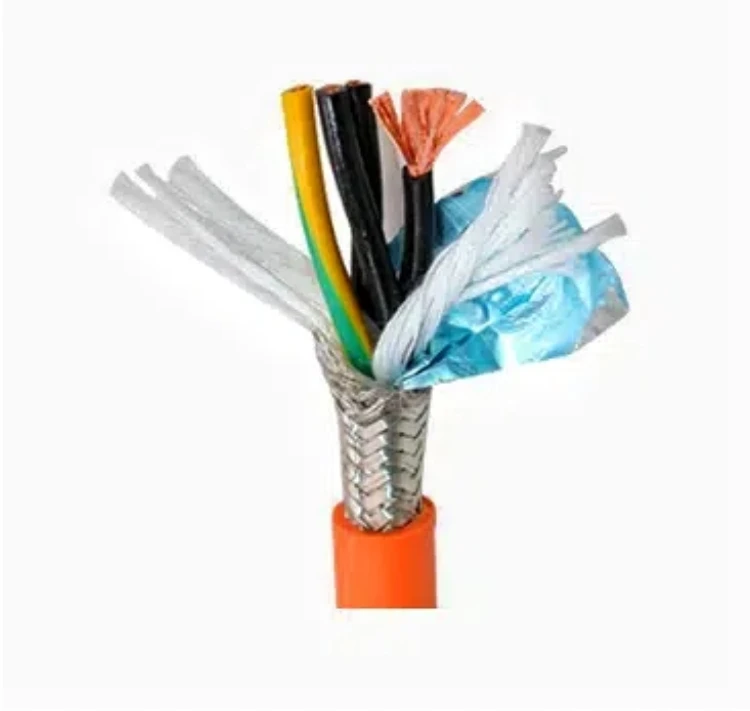 What is the difference between a control cable and a energy cable? Power cable focuses on "bearing capacity", control cable focuses on "signal integrity", the distinction is primarily reflected in the conductor, insulation sheath and shielding layer. They must overcome line losses, withstand the insulation stress attributable to excessive voltages, and mitigate heat technology from high currents, making certain stable power supply to the load finish. Selecting the appropriate management cable is essential for making certain effectivity, security, and long-time period reliability in industrial systems. These cables are predominantly copper-primarily based, making certain low-loss signal transfer. 2034 amid automation and renewable booms in 2026, deciding on the proper sort-based mostly on voltage (300/500V-450/750V), core depend, shielding needs, and requirements-ensures signal reliability, safety, and longevity. 2034 amid automation and renewable surges, proper choice prevents failures, reduces downtime, and optimizes costs-consult manufacturers for customized wants. Yes, customized control cables will be designed for specific applications. Control cables transmit alerts, while energy cable transmits electrical vitality. Control cables and energy cables are both important in electrical programs, but serve fundamentally different roles, making them non-interchangeable in functions. However, control cables and power cables-though visually similar-differ basically of their purposeful roles, structural designs, and sensible functions.
They handle giant currents and better voltages (typically 0.6/1kV and above, up to medium/high voltage classes), with thicker insulation, larger conductor cross-sections, and strong sheathing to support heavy power hundreds safely. Control cables transmit extremely low currents (starting from milliamps to amperes) via conductors with smaller cross-sectional areas (typically 0.5-2.5mm²) and multi-core configurations (2-24 cores), enabling simultaneous signal transmission and simplified wiring. The signal accuracy of these cables straight impacts product quality. For engineers, clearly distinguishing between two sorts of cables is fundamental to system design. Control cables serve because the essential "nervous system" in modern electrical and automation programs, transmitting low-voltage signals, knowledge, commands, and monitoring information between sensors, actuators, PLCs, relays, management panels, and area devices. Industrial Automation & Manufacturing - Connecting PLCs, sensors, actuators, robots, assembly lines, and process control gear for precise monitoring, regulation, and operation in Industry 4.Zero factories. Unlike energy cables that carry high power to drive equipment, control cables act because the "nervous system" of industrial and automation techniques, handling discrete (on/off) signals or analog measurements (e.g., temperature, stress, circulation) with precision and reliability.
If you are you looking for more information about electric control cable review our own website.